- History
- Discovery &
- Hedgehogs
History
About HMS Wellington
HMS WELLINGTON began her successful career in the 1930s. Laid down in September 1933 at Devonport Dockyard, launched in May 1934, she entered service in January 1935.
You can discover her full history from then until the present day by clicking on the links below.
1934 -1939
HMS Wellington Pre WW2
HMS WELLINGTON was the fourth in class of thirteen Grimsby Class Sloops and was laid down in Devonport Dockyard in September 1933.
She was built to patrol and protect the British Crown Colonies in the Southwest Pacific. This is the reason she is painted, now, in her tropical livery colours of white hull and superstructure with yellow funnel. On May 29th, 1934, she was launched by the Honourable Lady Fullerton, wife of Admiral Sir Eric Fullerton, then the Commander in Chief Plymouth Command.
Following acceptance trials, she officially entered Royal Naval service in January 1935 and sailed from the UK for New Zealand the following month. She arrived in her new home port of Auckland on 20th May 1935 after a 14,000 plus nautical miles’ voyage with nine flags showing port stopovers on the way.
WELLINGTON was one of four British vessels of the Royal Navy’s New Zealand Division, the precursor of the Royal New Zealand Navy (RNZN). Her role was protectorate duties patrolling the British Crown Colonies in the South Pacific. In 1935, there were over 500 inhabited islands, with many more
uninhabited islands spread over an area of some eight million square miles of ocean. After eight weeks of settling in and exercises with the other ships, LEITH, DUNEDIN and DIOMEDE, WELLINGTON assumed her patrolling role.
ROUTINE PATROLLING
WELLINGTON’s patrols, or cruises, had winter and summer routines. In winter, they would cruise the Pacific islands in more tropical climates to avoid the often-stormy seas of the Southern Pacific Ocean. The summer routine was to cruise New Zealand’s North and South Islands. Cruises varied in duration from between four to ten weeks away from home base in Auckland.
WELLINGTON’S first cruise in winter July 1935 took her to eleven islands, including the first of several visits to Fiji. On cruises to the Pacific Islands, the Captain and ship’s officers received and entertained local government officials and dignitaries onboard. The Ship’s Company would also experience local hospitality and, in return, participated in local sports events, playing island residents at cricket or football. Another highlight of island visits was the regular donation of tropical fruits, which were never in short supply onboard.
WELLINGTON also hosted school children onboard. A visit to Nelson, South Island in New Zealand in October 1935 was the first educational visit to the ship, with four schools invited onboard. History repeats itself, as WELLINGTON today
regularly welcomes free educational visits onboard, hosted by the Wellington Trust.
SOMETHING ON THE HORIZON...
WELLINGTON completed twelve cruises in all, in the Southwest Pacific and New Zealand. This came to an end in 1939 when, with another war in Europe looming, WELLINGTON was recalled to Britain. She left New Zealand on 3rd September 1939, hours before Prime Minister Winston Churchill declared war on Germany.

HMS Wellington at New Zealand Division Royal Navy, Devonport Naval base 1936
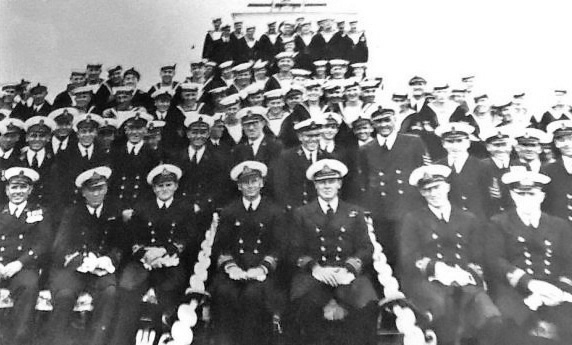
The ships company 1936
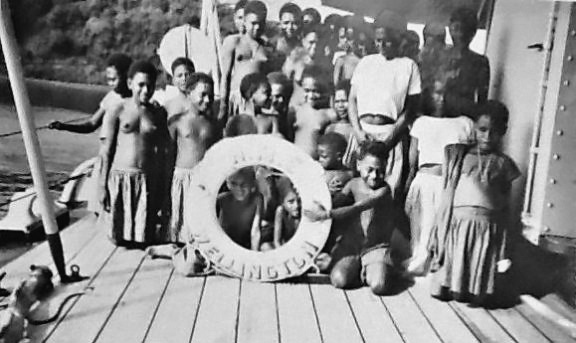
A mission school comes aboard. October 1935
1939 -1945
HMS WELLINGTON - THE WAR AT SEA
HMS WELLINGTON was recalled from New Zealand to home waters and left Auckland on 3rd September 1939, hours before Great Britain declared war on Germany.
Initially, WELLINGTON was deployed to Singapore to patrol the Malacca Straights. She was then directed to Freetown, Sierra Leone – the designated homeward convoy assembly point for ships assigned for convoy duties in the North Atlantic, named the Battle of the Atlantic.
The Battle of the Atlantic was the longest fought battle of the Second World War, starting on 3 September 1939, ending on the 7 May 1945
Convoys Explained
The convoy system, first introduced in 1917 during WW I, as a strategic response to the German submarine threat, provided some protection for merchant vessels, but also for Royal Naval capital ships such as aircraft carriers, through reduction of the effectiveness of relentless German U-boat attacks. These convoys consisted of merchant ships travelling in groups, accompanied by naval escorts to deter and attack the enemy while crossing the perilous North Atlantic.
Atlantic convoys were identified by letter and number. For example, HX was the designation for convoys on passage from Halifax, Nova Scotia, or later from New York, to Britain, and BHX when joined mid-Atlantic by convoys from Bermuda.
These convoys were conducted throughout the war, with each contributing to the overall Allied efforts by facilitating the transportation of essential supplies, troops, and equipment across the Atlantic Ocean. Convoys such as these played a critical role in sustaining the war effort and countering German attempts to disrupt Allied supply lines. Had the Battle of the Atlantic been lost, Great Britain would have been starved into surrender and defeat.
WELLINGTON took part in a total of 103 Atlantic Convoys and is the last surviving dedicated Battle of the Atlantic escort vessel in Britain.
SEPTEMBER 1939 – 1940, CONVOY ESCORT DUTIES
After only two days in Freetown, WELLINGTON joined her first convoy, during which she first came under attack off Ushant (Île d’Ouessant, Brittany) before returning safely to Devonport. A short and essential refit in Cardiff followed. Minesweeping gear, depth charge rails, Hedgehog anti-submarine projectiles, Bofors 40mm guns, and ammunition were fitted. Radar and communication updates were also made, as well as a change of livery from tropical white and yellow to battle grey camouflage.
After refit, WELLINGTON was hastened into convoy duties in the treacherous waters of the North Atlantic, protecting merchant convoys from U-boats, surface raiders and enemy aircraft.
1940 – 1943, BATTLE OF THE ATLANTIC & ARCTIC CONVOYS:
As the Battle of the Atlantic escalated, WELLINGTON became a crucial asset in the fight against German U-boats. Her role expanded to escorting convoys to the Soviet Union through the Arctic Ocean to Archangel or Murmansk. These Arctic
convoys (designated PQ and JW) were essential in providing vital supplies to the Eastern Front, and they exposed the crew
to the harsh conditions of the Arctic Circle, where ice was also an enemy.
OPERATION CYCLE (1940), EVACUATION FROM ST VALÉRY-EN-CAUX, NORMANDY::
Following the evacuation from the beaches at Dunkirk (Operation Dynamo), a less well-known story of WELLINGTON was that of her involvement in Operation Cycle which, in June 1940, was the evacuation of members of the 51st Highland Infantry Division, who were part of the British Expeditionary Force, and comprised mainly of the Highland Scottish regiments. The plan was to evacuate this part of the BEF out of France via the Normandy port of Le Havre. The 51st were under the command of the French Army in the area of the Maginot Line. Learning lessons from the rapid invasion of France in 1914, a sophisticated line of forts, anti-tank fortifications and ditches were constructed along the Eastern border of France. These were linked and served by an underground railway. The intention was to slow down any German advance from the East until French reinforcements could be mustered.
The invading German army, at the fall of Dunkirk in early June 1940, pushed westwards through the Low Countries to the north, avoiding the Maginot Line. The 51st and the French were withdrawn westwards in haste, towards Le Havre. In Normandy, they became surrounded by German forces from the River Seine to the south, including Generalleutnant Rommel’s Panzer tank division. Dug in outside the small Normandy coastal fishing port of St Valéry-en-Caux, the 51st were in danger of running out of food and ammunition, as well as anti-tank and artillery rounds. The opportunity for a planned evacuation through Le Havre was lost, not least owing to diplomatic delay. Commanding officer, General Victor Fortune, sent an urgent signal request to Churchill for the 51st to be released from French Army command in order to evacuate immediately. This was refused. Churchill was not prepared to consider upsetting the French Command for a second time, after Dunkirk, and ordered the 51st to stand fast under French command. When Churchill finally agreed to the request, when surrender was inevitable and the French had capitulated, it was too late. The enemy had surrounded the 51st and the only escape route could be off a beachhead at St Valéry.
WELLINGTON, the lead ship in command of a flotilla of six small vessels and a French passenger ferry, stood by to undertake the beach rescue. In flat calm warm weather, after repeated foiled efforts to approach the shore, WELLINGTON ultimately had to withdraw. Thick sea fog, heavy enemy artillery, and tank fire from well-embedded German positions on the clifftops, made approach impossible, and communication with those on the beach was extremely difficult. Notwithstanding this, and despite overall failure of the attempted Naval evacuation, WELLINGTON managed to take onboard some 300 soldiers, embarked via the ship’s boats, leaving the boats for other men to pull (row) their way back to Dover. The surviving remainder of the 51st Highland Infantry Division, over 10,000 men, were captured, following the surrender to the French, and route-marched to prison camps in Germany, to be held there for the duration of the War.
The reformed 51st Highland Infantry Division, this time under the command of the Canadian Army, marched into a liberated St Valéry-en-Caux on 2nd July 1944, with bayonets fixed and bagpipes and drums playing.
RESCUE MISSION, SINKING OF THE HIGHLAND PATRIOT (1940)
During the early hours of 1st October 1940, WELLINGTON was involved in a dramatic rescue mission following the sinking of the Royal Mail liner Highland Patriot. The liner had been torpedoed by a German U-boat, and WELLINGTON, responding to distress signals, rushed to the scene and engaged in the rescue of 169 survivors, including the Master (Captain).
1943 – 1944, MEDITERRANEAN OPERATIONS
In the later stages of the war, WELLINGTON was redeployed to the Mediterranean theatre of operations. Here, she participated in convoy escort duties against Axis Force (German and Italian) U-boats. She conducted anti-submarine patrols and played a pivotal role in supporting Allied operations in the region.
D-DAY AND OPERATION TORCH (1942)
WELLINGTON played a vital role in Operation Torch, the Allied invasion of French North Africa in November 1942 under the ultimate command of General Dwight D. Eisenhower.
WELLINGTON’s role would have been to provide escort and undersea/surface/air protection for the troop and equipment transport convoy of ships in support of a massive, multinational amphibious force landing in Algeria and Morocco. This involved the air, sea and land forces of, mainly, the United States, the United Kingdom, and the Free French forces under General Charles de Gaulle.
This marked the first major amphibious operation in this
theatre of war and a considerable turning point in its progress, establishing a critical foothold in North Africa.
PORTS OF OPERATION
WELLINGTON operated from the following strategic ports during her wartime service:
- Devonport
- Liverpool
- Londonderry (Lough Foyle)
- Freetown, Sierra Leone
In addition, she regularly underwent necessary repairs, re-equipping and updating of weaponry and navigational systems with technological advancements.
At the end of the Second World War, in June 1945, WELLINGTON was taken from Liverpool to Milford Haven. On 8th August 1945, she was driven, with anchors ready, onto the estuary mudflats outside Pembroke Dock, South Wales, to become part of the Royal Navy’s Reserve Fleet.

Dazzle camouflage - April 1942
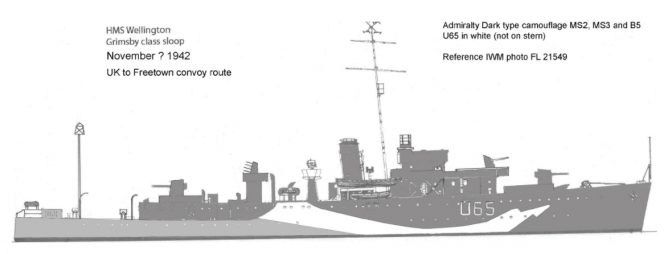
Dazzle camouflage - November 1942
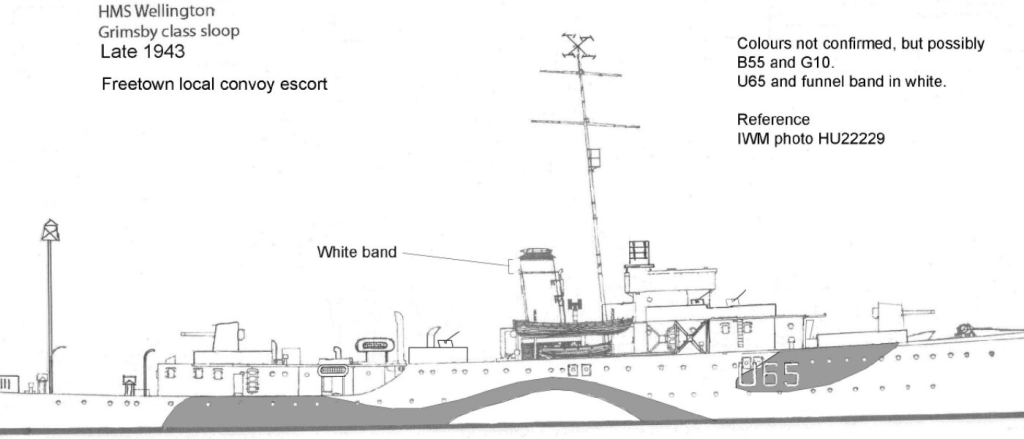
Dazzle camouflage - Late 1943
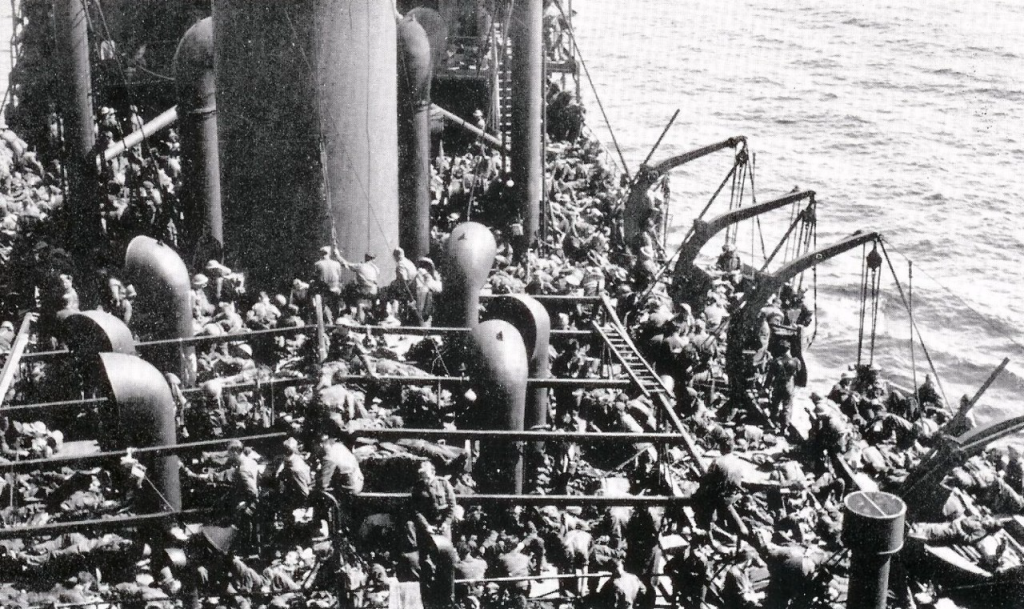
The evacuation of British forces from France, June 1940
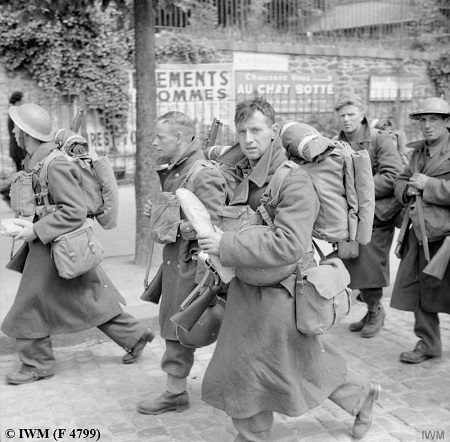
Troops on their way to the port at Brest during the evacuation of British forces from France, June 1940
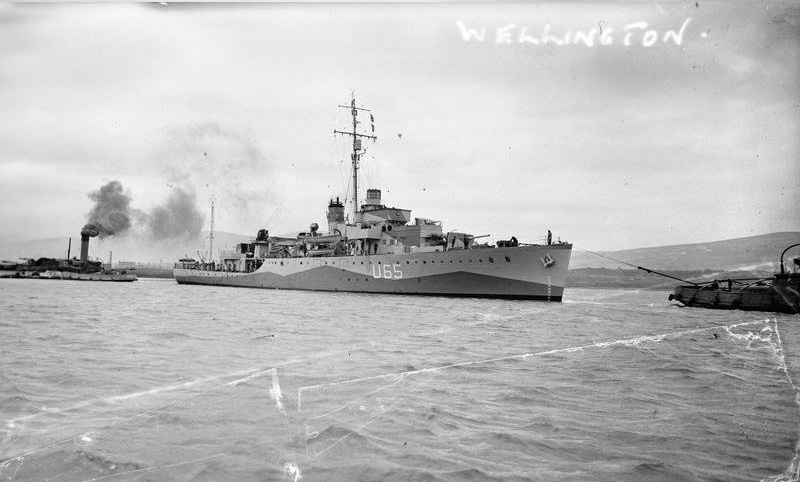
Dazzle camouflage - April 1942
The Highland Patriot, sunk by U boat, 1st October 1940
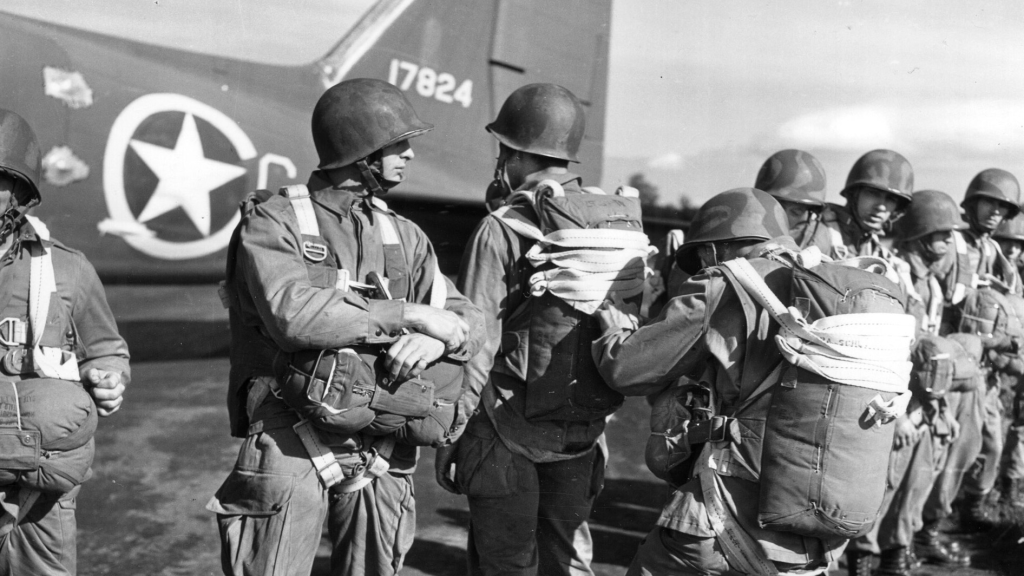
American Airborne troops in Operation Torch, 1942
1945 -2025
HMS WELLINGTON AND
THE HONOURABLE COMPANY OF MASTER MARINERS
In 1945, HMS WELLINGTON was part of the Reserve Fleet. She had steamed a total of 66,367 nautical miles in peacetime and 248,578 nautical miles in wartime. However, it soon became apparent that WELLINGTON would no longer be required for service, and she was decommissioned in late 1946. She was placed on the disposal list by the Admiralty and the Honourable Company of Master Mariners (HCMM) took interest in her, as it was always their ambition to have a floating livery hall. The HCMM purchased her in February 1947
WELLINGTON was towed from Pembroke Dock mudflats to Chatham Naval Dockyard for removal of all armaments, and major refit and conversion to a livery hall. There were several significant modifications made during this conversion. The most notable being the creation of the Livery Hall/Courtroom and Anteroom within the lower deck compartments that had been the engine and boiler rooms, as well as the installation of the magnificent staircase, to link three decks, that was taken from SS Viper, an Irish Sea passenger ferry dating from 1906 and requisitioned as a troopship in the English Channel during WW I.
On completion of the eighteen-month refit programme in December 1948, WELLINGTON was towed by tugs up the Thames to her current berth at Temple Stairs, Victoria Embankment, just opposite Temple Station. The ship was renamed the Headquarters Ship (HQS) WELLINGTON, as the HCMM’s new home.
In 2005, ownership of HQS WELLINGTON was transferred to the newly created Wellington Trust, with charitable obligations to preserve and maintain the ship for future generations. In April 2023, the HCMM moved ashore to a temporary home in Greenwich, with plans to commission and build a new floating livery hall.
HMS WELLINGTON (1935) is the last convoy escort sloop surviving in the UK today. The Wellington Trust acknowledges the actions of the HCMM in 1947 which gave the opportunity for the Ship to be preserved as an important and worthy survivor of a significant period in our country’s history.
As Professor Dominic Tweddle, the recently retired Director General of the National Museum of the Royal Navy, wrote in 2023:
“WELLINGTON encapsulates a moment in history now gone and if we are not careful gone beyond recall. Because of WELLINGTON’s history and uniqueness, I suggest that she has an international, national and local significance. The international and national significance are obvious. The local significance arises from the fact that she is the last survivor of the re-purposed warships which once lined the Thames. She is an integral part of London history. For us, it is crucial that WELLINGTON survives…”
WELLINGTON is listed on the National Historic Ships Register, no 502.

HMS Wellington being towed up the Thames , December 1948

Just clearing Blackfriars Bridge, December 1948
HMS WELLINGTON TODAY
The Wellington Trust is a registered charity and depends on public support to help achieve its objective of securing the
future of this much-loved iconic ship. As custodians of the ship and her future, the Trust’s objectives are:
- Conservation and preservation of the WELLINGTON aspart of the nation’s maritime heritage.
- The education of the public and of schools and colleges in the history and traditions of the Royal and Merchant Navies, emphasising the importance of seaborne trade to our island nation.
The Wellington Trust continues to host various learning programmes to provide young people with an experience onboard the Ship, with sessions tied to the National Curriculum. The Trust is also planning to extend our learning programme and open the ship as a visitor attraction and national memorial ship to those lost during the Battle of the Atlantic.
In 2024, His Majesty the King approved the name change from HQS WELLINGTON to HMS WELLINGTON, and she was renamed on 3 September on the 85th anniversary of the end
of the Battle of the Atlantic.
Today, WELLINGTON can still be hired as a distinctive riverside venue for events. This supports us financially providing vital revenue to conserve and preserve HMS WELLINGTON.
To find out more, please visit our venue hire page.